
Key facts: Peachtree Corners
- Peachtree Corners incorporated on July 1, 2012, and had 42,243 residents in 2020. [1]
- The Chattahoochee forms about seven miles of the city's northern and western border. [1]
- The city's Building Division reviews plans and inspects work inside city limits. [2]
- Gwinnett County provides water and sewer service in the city. [3]
What is here
Parts of Peachtree Corners this page covers
Peachtree Corners borders Norcross to the north, and some addresses here still use a Norcross mailing address.
- Subdivisions off Peachtree Parkway and Spalding Drive.
- Technology Park and its office, lab and light industrial buildings.
- Riverside neighbourhoods along the Chattahoochee on the city's northern and western edges.
- Town centre apartments, townhomes and retail near the Forum.
The city
Young city, older subdivisions
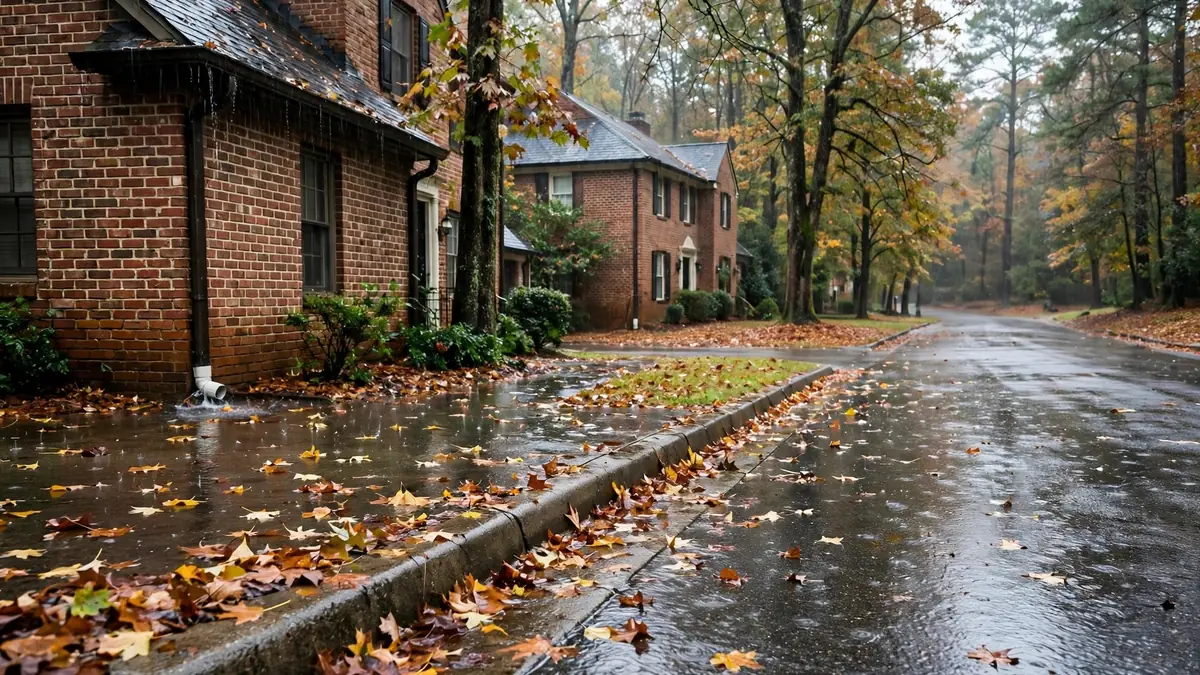
Peachtree Corners only became a city on July 1, 2012, after a referendum the previous November, and at 42,243 people in 2020 it is Gwinnett County's largest city. [1] Its roots go further back: Technology Park Atlanta was planned in 1967 as a campus for high-tech firms, and the surrounding housing grew up alongside it. [1] The 2020 census counted 18,028 housing units. [1]
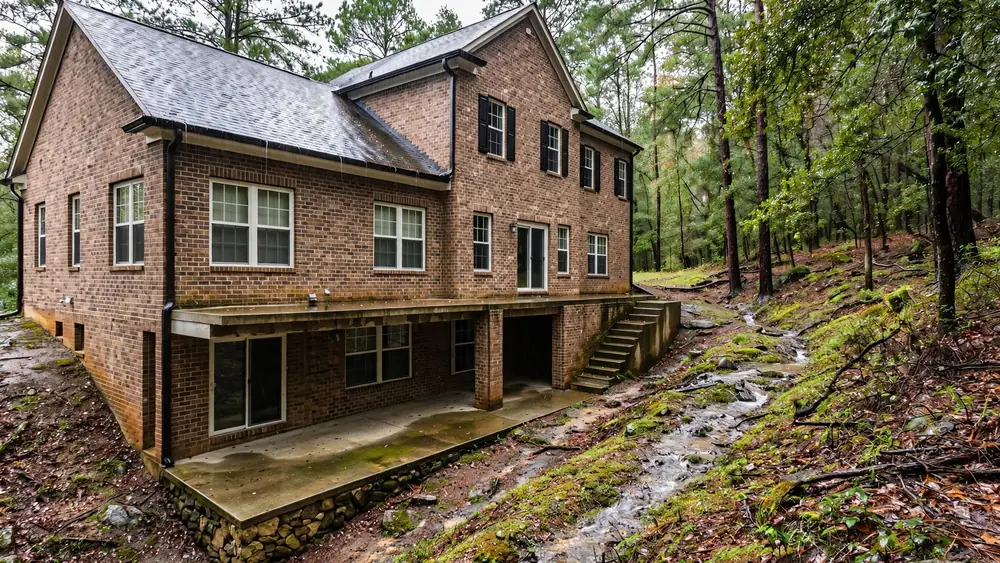
For a homeowner, this often means a house older than the city itself. Decades-old subdivisions now have original water heaters long replaced, supply lines at different stages of life, and basements finished at various times by various owners. Many houses sit on sloped, wooded lots where a lower level faces the back garden and a buried wall holds up the hill.
A street address can also mislead. Because the city is relatively new and a Norcross mailing address is still common in places, the first question for any permit is whether the house actually lies within the city limits. That matters more than the name on your post.
Many of those older houses have now had several owners, so do not assume that the valve labels, drain routes or basement finishes match what a past inspection report describes. Walk the house yourself, try each valve gently and note what you find, so that nobody has to guess on the day water appears.
What comes up here
Water problems common in Peachtree Corners
Wet finished lower level
Sloped lots and buried walls channel runoff into finished rooms.
Attic line failures
Bathrooms upstairs are often fed by lines through a cold attic.
Read moreWater heater and appliance leaks
Equipment of a certain age often fails first in a garage, closet or lower level.
Read moreCeiling stains below bathrooms
Showers and toilets upstairs can leak for weeks before anyone notices the room below.
The river
Seven miles of Chattahoochee frontage
The Chattahoochee River forms roughly seven miles of the city's northern and western border and flows past many neighbourhoods. [1] During the September 2009 event, the National Weather Service reported that the Norcross gauge on its table crested at 14.51 feet, with a flood stage of 12. [4] USGS data from the wider flood showed how quickly rainfall in this watershed could turn into very high flows. [5]
Most homes here will never see river water. For those close to the banks or to a tributary, it is worth checking FEMA's Flood Map Service Center and speaking with an insurance agent, given that homeowners policies generally exclude outside flooding and flood cover usually carries a 30-day wait. [6] [7] A flood zone map is a guide to mapped risk only; a heavy storm can still push water into a lower level on a hillside far from any river.
River-related water also changes the cleanup. Outside floodwater is treated as contaminated, which means porous materials are generally removed, not dried in place, and the room must be cleaned before drying starts. The EPA's flood cleanup resources are a useful place to start reading. [8]
Permits
The Peachtree Corners Building Division
If your property is inside the city, permits go through Peachtree Corners rather than Gwinnett County. The city has its own Building Division, which checks plans and inspects homes and commercial buildings going up or being altered inside the city. [2] Replacing like-for-like carpet or paint may not need anything, but moving plumbing, rewiring or changing structure often will.
Ask your contractor who will apply for the permit, and make sure the final inspection happens before walls are closed up, because inspections generally cannot be done once the work is covered. Homeowners' associations are common here, so also check for rules about exterior changes, dumpsters and work vehicles.
- Confirm city limits first
- City permits, not county, inside the line
- Inspection before walls are closed
- Check any HOA rules for dumpsters and exterior work
If it happens
First steps for a Peachtree Corners home
- 1
Close the main or appliance valve
Most homes have a main valve at the point of entry and valves at appliances. Find yours before you need it.
- 2
Call the county for public-side problems
Gwinnett County Water Resources handles water and sewer for the city. Report meter-box leaks and backups to its dispatch line. [3] [9]
- 3
Protect the finished level
Lift furniture and take up rugs. Then make sure the lower-level power is safe before going in.
- 4
Check outside during the storm
From a safe spot, see whether a downspout has come loose or water is running toward the wall. This may be the actual source.
- 5
Record and report
Take photos, then notify your insurer and your HOA if common elements are involved.
- 6
Call a contractor
Tell them the level, the room finish and how long the water has been there.
Technology Park
Commercial buildings have their own needs
Technology Park and nearby office parks contain offices, labs and light industrial spaces in buildings of varied age. A commercial water loss means raised floors, server rooms, ceiling grids and tenant improvements, and possibly sensitive equipment. Multiple tenants may be involved, so the building manager and insurers tend to set the process. Commercial cleaning and drying should be planned around business continuity, with records kept for each suite.
If you are a tenant, tell the building manager at once, shut down electronics in affected areas if you can do so safely, and do not power up wet equipment. Take photos of serial numbers and racks. Electronics may need specialist assessment, and data recovery is a separate matter. This site does not claim that any contractor offers that service, so ask directly.
Housing type
Water issues by building type in the city
| Building | Most likely issue | Worth asking |
|---|---|---|
| Older two-storey with basement | Runoff at uphill wall, attic line freeze | Where do gutters discharge? |
| Ranch on slab or crawl | Appliance leak, crawl dampness | Is there a vapor barrier? |
| Town centre townhome | Leak between units, HVAC condensate | What does the HOA cover? |
| Riverside home | Possible mapped flood risk | Which flood zone, what policy? |
| Apartment community | Unit-to-unit leaks | Has management been told? |
| Office or lab in Tech Park | Roof and HVAC leaks, equipment | Who manages the building and claim? |
Lots and drainage
Wooded lots, leaves and clay
Mature hardwoods are part of the appeal here, and they bring their own water problems. Leaves and pine straw clog gutters every autumn and can send an entire roof's runoff down the fascia and along the foundation. Tree roots can also get into older sewer laterals, and the county's policy makes that lateral the owner's responsibility from the house to the county line. [10]
The red clay below the topsoil holds water once saturated, even if the USDA classes the soil profile as well drained overall. [11] Downspouts that end right at the wall, flower beds raised above the slab line, and hard landscaping that slopes in the wrong direction can all direct water to the foundation. These are often simple fixes, but do them after the house has dried out rather than instead of drying it.
Before you need it
A short checklist for a Peachtree Corners home
- Find and label the main water valve, and try it once a year.
- Clean gutters after the leaves drop, and again in late winter.
- Extend downspouts away from the walls, in the direction of a safe discharge point.
- Check for a sump pit and test the pump before storm season.
- Look up your flood zone, then ask your agent about flood and sewer backup coverage.
- Insulate attic and garage plumbing runs.
Decisions
Finished lower levels: rebuild them the same way?
After a major lower-level flood, some owners simply rebuild; others take the chance to make the space more water-tolerant. Options to discuss include raising finishes off the slab with a gap at the base of the drywall, choosing flooring that tolerates moisture, keeping electrical outlets higher and using closed-cell insulation against concrete. None of these will make a room waterproof, but they can make the next event far easier to recover from.
First find out why the water came in. Rebuilding exactly the same finish against a wall that still takes on water only delays the same conversation. The basement and crawl space page sets out how to identify the source, and your city permit office can advise on what the rebuild needs.
Age of systems
Decades-old plumbing and appliances
A house built in the first waves of development around Technology Park may now be on its second or third water heater, and it may still have original supply piping behind the walls. Water heaters often sit in a garage, a closet or a basement, where a failure can go unnoticed for a while, and an older pan without a drain offers little protection. Note the age from the label, and ask a plumber whether it is approaching the end of its working life.
Washing machine hoses, ice maker lines and toilet connectors are small parts that cause many of the leaks seen in any established suburb. Replacing them with quality parts is simple, and it is worth doing before you go on holiday. Polybutylene pipe, used in some homes in past decades, has a poor reputation for reliability; a plumber can tell you if you have it and whether to plan a replacement.
Seasons
Seasonal checks for a wooded Peachtree Corners lot
| When | Check | Why |
|---|---|---|
| Late autumn | Gutters, downspout extensions | Heavy leaf fall clogs them |
| Before a forecast freeze | Hose bibs, attic and garage lines | Exposed pipes fail first |
| Early spring | Sump pump, storm drains near the lot | Storm season is starting |
| Summer | Humidity in the lower level, AC drain | Condensate and damp air cause slow damage |
Timeline
From water on the floor to a rebuilt lower level
Expect a finished lower-level job to happen in stages. Extraction and removal of wet materials usually happen within the first day or two. Drying follows for several days. Then a pause while you, your insurer and any contractor settle the scope, followed by rebuilding that may need city inspections before walls are closed. The total is usually much longer than the drying itself, so plan where stored items and family members will go for that period.
Use the pause sensibly. It is the moment to fix gutters, slope and drains, to raise outlets if the rebuild allows, and to choose materials that can tolerate another wet event. It also gives you the chance to read the contractor's written scope line by line, so that you know what will return and what will not before you sign for the next stage.
Rental and short-term owners
If you let out your Peachtree Corners home
If you rent out your home, your insurance may be a landlord policy, with different terms from an owner-occupier policy, and vacancy rules may apply between tenants. Tell your tenants how to reach you outside working hours, and show them where the main valve is on the day they move in. Ask them to report drips and stains promptly. It takes only one quiet leak in a lower-level closet to turn into a large job.
Georgia law places a repair duty on landlords, so treat a tenant's report as urgent and answer in writing. [12] Keep records of each report, what you did and when. If the home is managed by an agent, make sure the agent knows who has authority to approve drying work outside office hours, because in an urgent case nobody wants to wait for approval while the water spreads.
Selling or buying
Water history and a Peachtree Corners sale
A past water loss does not have to derail a sale, but poor records can. Keep the moisture logs, the plumber's invoice, the permit and final inspection, and photographs of the dried framing before it was closed in. A buyer's inspector will look for stains, musty smells and fresh paint in odd places, and being able to show that the problem was found and fixed is reassuring. Georgia sellers should ask their agent or attorney what must be disclosed, rather than guessing.
If you are buying, walk the lower level after a rain if you can. Look at the base of the buried wall, the sump pit, the crawl space ground cover and any fresh patch of paint. Ask the sellers about past claims, check the flood map for the address and speak with your insurance agent before closing, because a claims history or a mapped flood zone can affect your cover. [6] Ask your inspector to run water and look at the meter too. A dial that creeps with everything off can reveal a leak no one has noticed, and it is far better to find that before you own the house than afterward. A few questions now may spare you a long summer of damp rooms and equipment noise.
Rentals nearby
Apartments around the town centre
Renters here should treat a leak the way renters anywhere in Gwinnett would: tell the manager first, photograph everything and put it in writing. Upper-floor units in newer buildings may have sprinklers and shared chases just like older complexes, so warn the neighbours below you. A renters policy covers your own belongings, and it is worth checking what it says about water backup before there is a problem to deal with.
Questions
Peachtree Corners water damage questions
Who issues permits in Peachtree Corners?
The city's own Building Division handles plan review and inspections for structures within city limits, rather than Gwinnett County. Confirm that your address is in the city, because the Norcross mailing address is sometimes used nearby. Check the city's website for current requirements. [2]
Who provides water and sewer in Peachtree Corners?
Gwinnett County Department of Water Resources provides water and sewer service in the city, according to the city's utilities page. For problems at the meter or in the street, sewer backups and overflowing manholes, use the county's dispatch line, 678.376.7000. [3] [9]
Is my home in a Chattahoochee flood zone?
Only an address check can say. Use FEMA's Flood Map Service Center to look up your property, and ask your agent or a surveyor to interpret it. Remember that being outside a mapped zone does not remove the risk of runoff or seepage. [6]
Does my HOA need to know about water damage?
Often yes, especially if common walls, roofs or exterior elements are involved, or if you need a dumpster or trucks on the street. Read your covenants and tell the association early. Townhome associations usually have their own insurance rules, which affect who handles which repair.
My lower level gets wet only in big storms. Why?
That pattern usually points to surface runoff, overflowing gutters or a footing drain that cannot keep up, instead of a plumbing leak. Watch during rain from a safe place and see where the water goes. Correct the outside first, then consider interior systems if the problem continues.
Can the river back up into my house?
If you live close to the river or a tributary, high water can reach low parts of a property and may affect sewer and storm lines too. For most of the city, runoff is the more common problem. Check your mapped risk and your coverage, and report drainage issues during storms.
Nearby
More around Peachtree Corners
Back to all of Norcross. Nearby pages: Berkeley Lake, Buford Highway Corridor, Historic Norcross.
Related help for Peachtree Corners: water extraction, structural drying, sewage backup cleanup, fire damage restoration and smoke damage cleanup. First time dealing with this? Read the first hours after water damage.
Sources and citations
- [1]Wikipedia: Peachtree Corners, Georgia
- [2]City of Peachtree Corners: Building permit
- [3]City of Peachtree Corners: Utilities
- [4]National Weather Service Peachtree City: The epic floods of 2009
- [5]USGS: Epic September 2009 flooding in Georgia
- [6]FEMA: Flood maps
- [7]FEMA: National Flood Insurance Program
- [8]U.S. EPA: Flood cleanup and indoor air quality
- [9]Gwinnett County Water Resources: Report a problem
- [10]Gwinnett County: Sewer lateral policy homeowner handout
- [11]USDA NRCS: Cecil soil series
- [12]Justia: O.C.G.A. section 44-7-13, landlord duty to repair